ServicesReverse Osmosis
Reverse Osmosis Systems in Plano
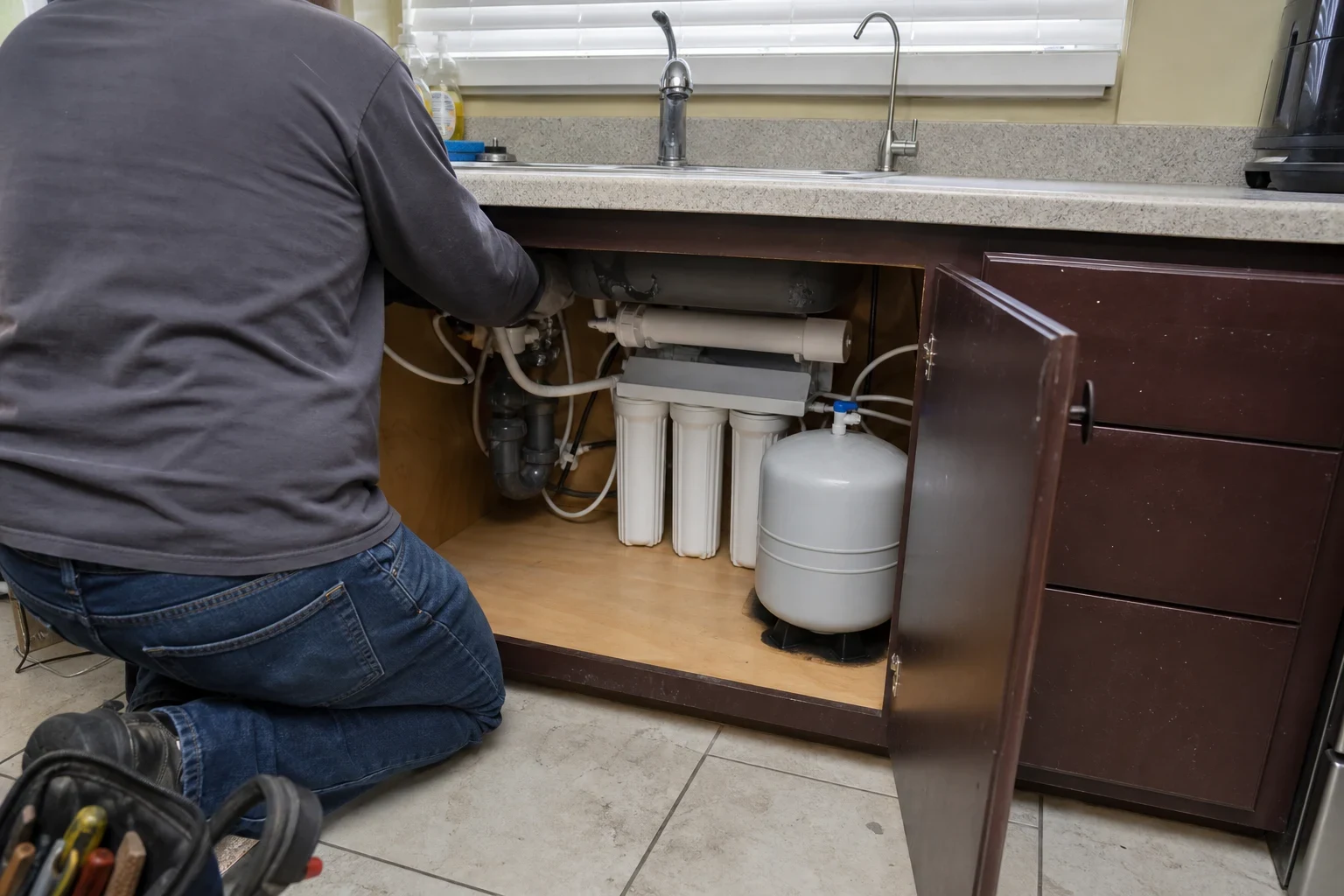
We install under-sink reverse osmosis systems that give your kitchen its own tap of filtered water for drinking and cooking. Before anything goes in, we photograph your cabinet, shutoff and drain, so you see what we found and what we changed.
Filtered Water Right Where You Drink It
Reverse osmosis pushes your tap water through a very fine membrane that holds back most dissolved solids, along with things like lead from older fixtures, nitrates and fluoride. Carbon stages before and after the membrane take out the chlorine taste many people notice in city water. What comes out of the small faucet at your sink tastes clean and plain.
Choose it when the water you care most about is what goes into glasses, pots and baby bottles, rather than what runs through the shower or washer. If you also want better water at every tap in your home, our Whole-Home Filtration page covers that, and the two pair well.
We keep the work visible. You will see the space under your sink before we start, each connection as it goes in and the finished system, all in photos you keep.
What Your Reverse Osmosis Install Includes
- A system matched to your household
- We help you choose between a compact tank system and a tankless unit based on how much water your family drinks and how much cabinet room you have. We explain the trade-offs in plain terms.
- Pre-filters, membrane and post-filter
- A sediment filter catches grit, a carbon filter protects the membrane from chlorine, and a final carbon stage polishes the taste. An optional remineralization stage adds back a little calcium and magnesium if you prefer that flavor.
- A separate spout for filtered water
- Your new spout can go in an unused sprayer or soap-dispenser hole, or we drill a fresh opening, granite and quartz included. Your main kitchen faucet stays just as it is.
- Feed valve and drain connection
- We tie into your cold water line with its own shutoff and connect the reject line to your sink drain with a proper drain saddle, so nothing backs up into the system.
- Optional refrigerator line
- If you want filtered ice and fridge water, we can run a line from the system to your refrigerator. We check the route first and show you where it will go.
- Photos and a walk-through
- Before we leave, we go through the pictures with you, show you how to shut the system off and point out which filters get changed when. The work area is cleaned up and your cabinet put back in order.
Signs a Reverse Osmosis System Makes Sense
You buy bottled water every week
Cases of water in the garage and a pile of empty bottles add up. A reverse osmosis faucet gives you the same kind of water straight from your sink.
Your tap water tastes like a pool
City water is disinfected, and some people find the taste hard to live with. The carbon stages in an RO system take that taste and smell out of your drinking water.
Your home has older plumbing or fixtures
Older faucets and solder can add trace lead at the tap. Reverse osmosis is one of the most effective ways to reduce it in the water you drink.
Coffee and ice look or taste off
Cloudy ice cubes, white film in the kettle and flat-tasting coffee often point to dissolved minerals. RO water brews cleaner and freezes clearer.
You just want extra assurance
Some families simply want another layer of filtration for babies, older relatives or anyone with health concerns. That is a perfectly good reason, and we will not oversell beyond it.
How Your Install Day Goes
- 1
A conversation and a quote by phone
You tell us what bothers you about your water and how your family uses it. We ask about your cabinet space, your refrigerator and your water pressure, then give you a quote.
- 2
Checking under the sink first
On install day we clear the cabinet, check the cold supply, shutoff valve and drain, and photograph each one. If we spot a corroded valve or a slow leak, you see it in the picture and we talk about it before going further.
- 3
Installing and connecting the system
We mount the filter housing and tank, set the faucet, make the feed and drain connections and add the fridge line if you chose one. Each connection is documented as it is finished.
- 4
Rinsing, leak checks and the walk-through
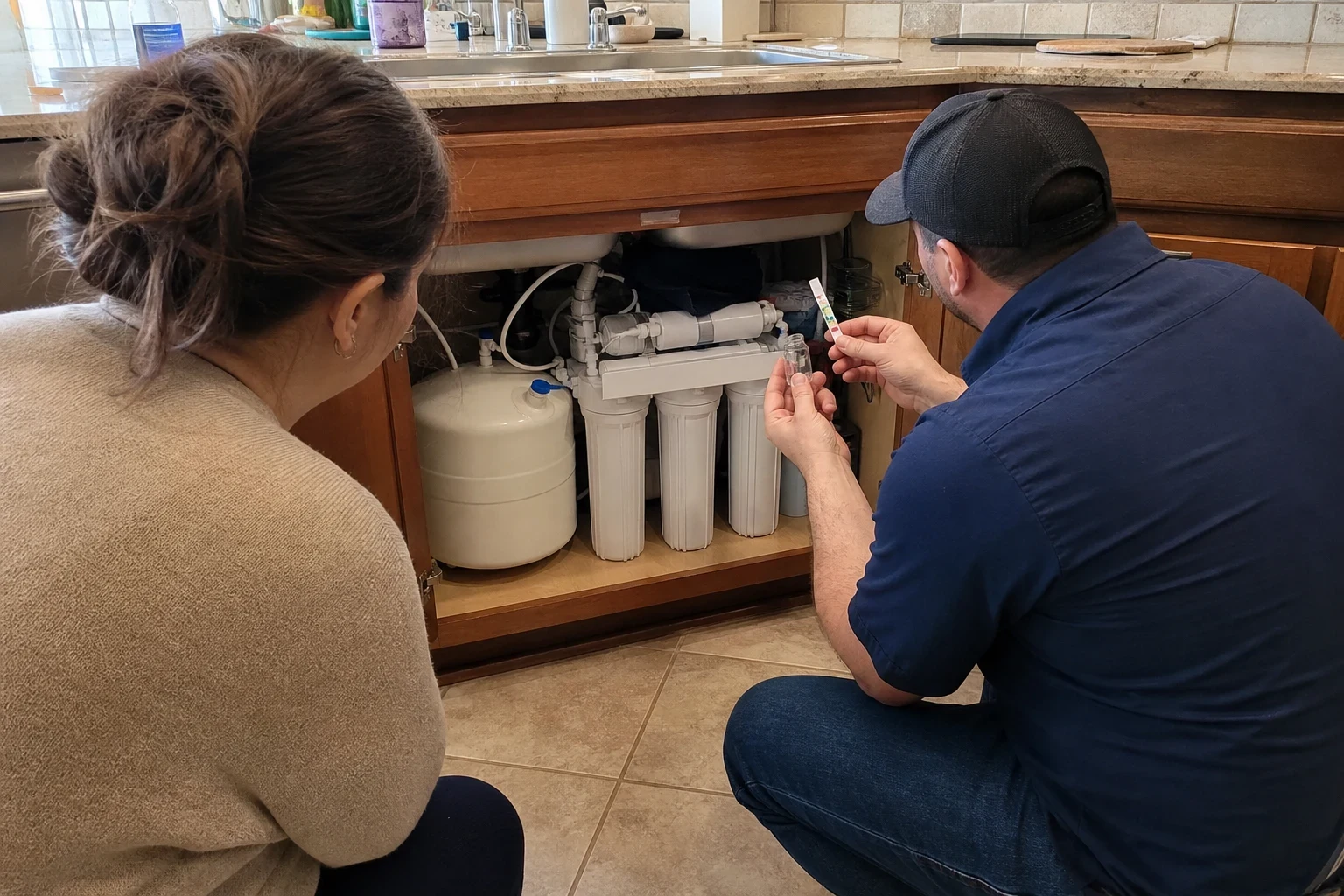
Fresh cartridges get rinsed through, the storage tank fills, and we run a dry paper towel around each joint to catch any seep. Then we sit down with you to go over the images and the filter schedule, so you know what you have and how to care for it.
What Shapes the Cost of a Reverse Osmosis System
Most reverse osmosis quotes come down to the system you choose and what your kitchen needs to fit it. We walk you through each line on the phone so there are no surprises later. Standard professional installation included for qualifying homes.
- Tank or tankless
- Tank systems are simpler and fit most cabinets. Tankless units save space and waste less water but cost more and need a nearby outlet.
- Extra stages
- Remineralization or additional carbon stages change the price of the unit and of its replacement filters.
- Your countertop and faucet hole
- Using an existing sprayer or soap dispenser hole keeps things simple. Drilling through stone takes more time and the right bit.
- Fridge line and routing
- Running a line to the refrigerator adds tubing and labor, more so if it has to cross the kitchen or go through cabinets.
- Water pressure
- Reverse osmosis works best with good pressure. If yours runs low, a booster pump may be needed for steady output.
Reverse Osmosis Questions We Hear Often
Something not covered here? (972) 833-6755
Does a reverse osmosis system waste water?
Yes, some. The membrane sends a portion of water down the drain to rinse away what it filtered out. Newer and tankless systems waste much less than older designs, and we can show you the ratio for each option before you choose.
How often do the filters need changing?
Plan on new sediment and carbon cartridges roughly every twelve months. The membrane lasts longer, often two to four years, though heavy use or mineral-rich water can shorten that. We write the dates down for you at the walk-through so you are not guessing.
Does RO strip out the good minerals?
It does take out most dissolved minerals, since the membrane cannot sort helpful ones from the rest. For most people, food supplies far more calcium and magnesium than drinking water ever did. If you miss a slightly fuller flavor, we can fit a remineralization cartridge after the membrane that puts a small amount back.
I already have whole-home filtration. Do I still need this?
Not always. A whole-home carbon system handles chlorine taste at every tap, while reverse osmosis goes further on dissolved solids and lead at the kitchen sink. Many homes use both, and we will tell you honestly if one is enough.
Will hard water shorten the life of the membrane?
It can. Heavy mineral content builds up on the membrane over time. If your water runs hard, we will explain whether pairing RO with one of our water softeners is worth it for your home.
Ready for Better Water at Your Kitchen Sink
Tell us how your family uses water and what bothers you about it. We will talk through the right system by phone and give you a quote, and once we install, you get photos of every step.