ServicesWater Softeners
Water Softeners in Plano, Sized From Your Hardness Reading
Scale on faucets, spotty glasses and a water heater that rumbles usually point to hard water. We measure your hardness first, recommend a softener only when the numbers support it, and send photos of each step so you know what was done in your home.
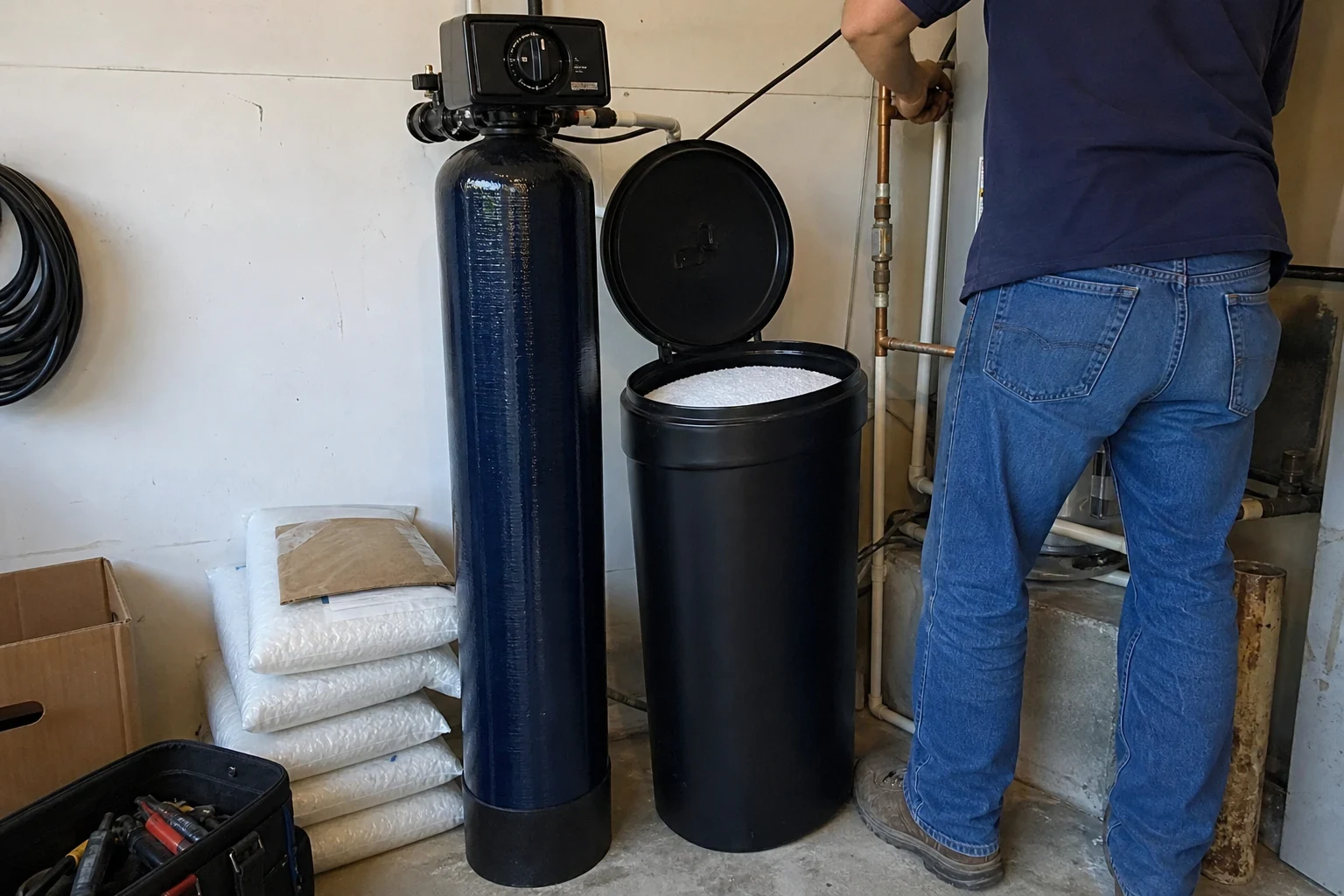
What a Softener Does, and When It Makes Sense
Hard water carries calcium and magnesium. They dry into chalky crust on showerheads and settle as scale inside water heaters, dishwashers and ice makers. A softener pulls them out as water passes through a tank of resin beads, which swap those minerals for sodium or potassium and then rinse themselves clean with brine on a timer.
A softener is the right call when a hardness reading shows enough minerals to cause real buildup. It will not fix chlorine taste or odor. That is a job for whole-home filtration, and we will tell you if that fits your concern better. Plenty of homes end up with both, but we start from your reading, not a package.
As we work, we take photos of your existing plumbing, the connection points and the finished setup. You keep that record, so the next plumber or a future buyer can see how the system went in.
What Your Softener Installation Includes
- Hardness check before sizing
- We take your hardness reading and ask about daily routines, like the size of your household and how many loads of laundry run in a week. Those details set the grain capacity, so the unit regenerates on a sensible schedule instead of burning through salt.
- Bypass valve
- Every install includes a bypass valve. Turn one handle and water skips the softener for service days or filling a pool, while the rest of the house keeps running water.
- Proper drain connection
- The regeneration line runs to an approved drain with an air gap, which keeps wastewater from ever siphoning back into your supply.
- Brine tank setup and first fill
- We place the brine tank, add the first salt, and set regeneration for the middle of the night when nobody is showering.
- Photo record of the job
- You get before, during and after pictures showing where we tied in, how the lines run and what the finished system looks like.
- Walkthrough and settings
- Before we leave, we show you how to check the salt level, read the control head and use the bypass. It takes about ten minutes and saves a lot of guessing later.
Signs Hard Water Is Wearing on Your Home
White crust on fixtures
Chalky rings around faucets and showerheads that come back a week after cleaning are mineral deposits, not soap.
Spots on dishes and glass
Cloudy glasses straight out of the dishwasher and spots on shower doors usually mean minerals are drying on the surface.
A noisy water heater
Popping or rumbling from a tank water heater often means sediment and scale have settled at the bottom, which makes the burner work harder.
Soap that won't lather
Hard water binds with soap, so shampoo and detergent take more to work up and leave a film on skin and towels.
Short-lived appliances
If ice makers, coffee makers or dishwasher parts keep clogging, scale inside the small lines is a likely cause and worth checking.
How a Softener Job Runs
- 1
Water test and report
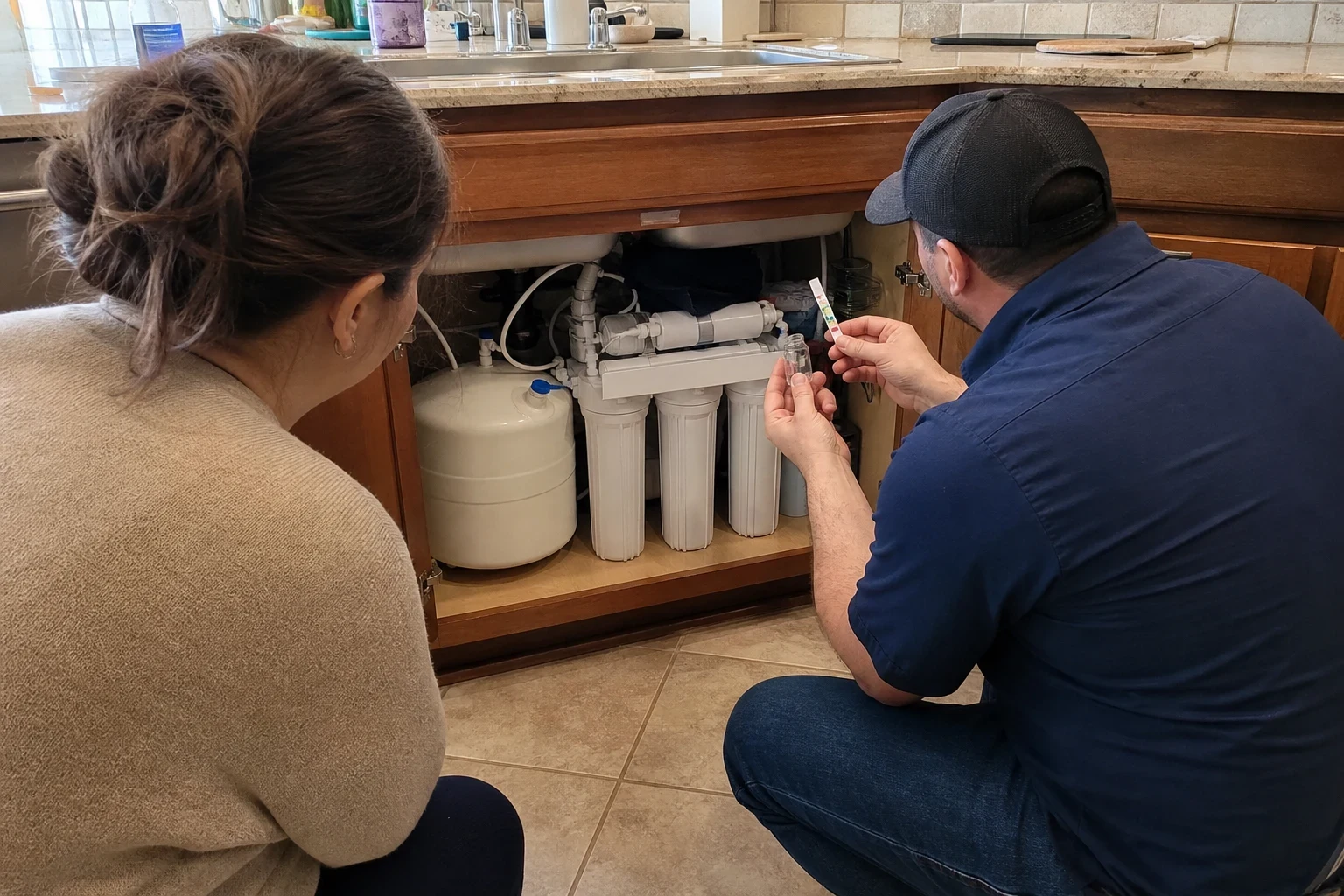
We start with a water test and a written report that shows your hardness in plain terms. If the reading is low, we say so and skip the softener talk.
- 2
Your quote by phone
We go over sizing, where the unit will sit and any plumbing changes it needs, then give you the quote by phone so you can decide without anyone standing in your kitchen.
- 3
Install day
We protect the floor, shut off the water, photograph the existing lines and tie the softener in, usually where the main line enters near the garage or water heater. Water is off only for the tie-in.
- 4
Startup and check
We flush the system, run a test regeneration and check every joint for leaks before calling it finished.
- 5
Walkthrough and cleanup
You see how it works, we clear out packaging and debris, and your job record arrives so you have the whole install on file.
What Moves the Price of a Softener
No two homes need quite the same setup, so we price after the water test rather than quoting off a chart. Standard professional installation is included for qualifying homes. Here is what makes one job cost more than another.
- Hardness and household size
- Harder water and more people mean more minerals to remove each day, which calls for a larger grain capacity and resin tank.
- Existing softener loop
- Some homes were built with a plumbed loop ready for a softener. Without one, we have to cut into the main line and run new piping, which adds time and material.
- Drain and power access
- The unit needs a nearby drain and an outlet. If either is far from the best spot, extra line or rerouting goes into the quote.
- Pairing with filtration
- If you also want chlorine taste removed, adding a carbon stage or whole-home filtration changes the parts list. We quote it as a separate line so you can choose.
Water Softener Questions
Something not covered here? (972) 833-6755
Do I really need a softener?
Only if your reading shows it. When water is already fairly soft, a softener mostly means bags of salt and an extra bill. So we check first and show you the number before we recommend anything.
Will softened water taste salty?
Most people notice no salt taste, though softened water does carry a small amount of sodium. If you want drinking water without it, a reverse osmosis system under the kitchen sink handles that nicely. Potassium chloride is another option in the brine tank.
Does a softener get rid of chlorine taste?
No. A softener removes hardness minerals, not chlorine. For taste and odor, whole-home filtration with carbon is the right tool, and the two can share the same line.
How much upkeep is there?
The main chore is keeping salt in the brine tank. How often you refill depends on how much water your household goes through, and a quick look under the lid tells you when the level is getting low. It also helps to poke at the salt once in a while to break up any hard crust. We show you both during the walkthrough.
How long does installation take?
Most softener installs fit within a single visit, and your water is only off during the actual tie-in. Jobs that need a new loop or a longer drain run take longer, and we tell you that when we give the quote.
Find Out If a Softener Is Worth It for Your Home
Start with a water test and see your hardness for yourself. If a softener makes sense, we will size it, install it and send you photos of each step.